Practically the whole of North America is misled.
This gender equality concoction promoted by the United Nations is artificial and simply polluting everyone’s mind, including many of our rank and file devotees, and, unfortunately, many of our ISKCON leaders.
It is a very simple thing, very simple thing.
Śrīla Prabhupāda never appointed mātājīs in positions of leadership, never.
Śrīla Prabhupāda always stressed that women need to be protected, that women are meant to be dependent, not independent, that women should be married.
During Śrīla Prabhupāda’s time there were no female GBC members. As recalled by His Holiness Tamāla Kṛṣṇa Mahārāja, Śrīla Prabhupāda stated that if Yamunā Devī Dāsī (one of the most senior female disciples at the time) were not in a female body, he would have appointed her as a GBC. He did not.
During Śrīla Prabhupāda’s time there were no female Temple Presidents. When Yamunā mātājī became separated from her husband Guru dāsa because he had taken sannyāsa he allowed her to look after an āśrama or Center with only women. He did not appoint her as a regular Temple President.
During Śrīla Prabhupāda’s time there were no female Property Trustees appointed by Śrīla Prabhupāda.
In the last year of his manifest pastime when, due to his poor health, Śrīla Prabhupāda selected senior devotees to act as ṛtvik, and who later after his disappearance would become regular gurus, he did not select any mātājīs.
This false gender equality that is rampant in the western world is not supported in Vedic culture. It is a major deviation.
Śrīla Prabhupāda did not give sannyāsa initiation to any of his female disciples. He clearly stated that women cannot take sannyāsa.
In the Vedic culture traditionally a sannyāsī is one who becomes a guru. Forbidding women to become sannyāsīs should be understood as forbidding women to become gurus.
Had Śrīla Prabhupāda felt that men and women are equal, why did he maintain all these distinctions.
In the Vedic system of daiva varṇāśrama dharma that Śrīla Prabhupāda very much wanted to establish, only qualified brāhmaṇas can take sannyāsa. A qualified brāhmaṇa means one who has received the sacred thread or upanayana and afterwards has taken education and training in gurukula.
Śrīla Prabhupāda forbade women to take sannyāsa. This means women are not technically brāhmaṇas as they are not awarded the sacred thread and thus are not qualified to give the sacred thread to anyone as they themselves never received it. They cannot give dīkṣā. śikṣā they can give, but not dīkṣā.
His Holiness Śivarāma Mahārāja and others who oppose this appointment of female dīkṣā gurus are correct in wanting to uphold the sanctity of the Vedic culture.
There are no female dīkṣā gurus within the Śrī Vaiṣṇava sampradāya.
There are no female dīkṣā gurus within the Śrī Madhva sampradāya.
There are no female dīkṣā gurus within the mainstream Gauḍīya Vaiṣṇava sampradāya.
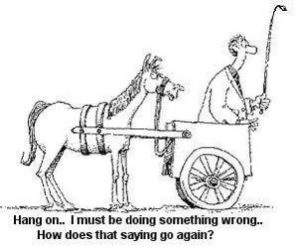
We are putting the cart before the horse. We have yet to understand the basics of daiva varṇāśrama dharma.
Until and unless the leaders of ISKCON thoroughly discuss the many pertinent and foundational instructions given by our Founder Ācārya Śrīla Prabhupāda, and supported by śāstra, relating to daiva varṇāśrama dharma, they should refrain from venturing into uncharted territory and thus risk to totally dismantle Śrīla Prabhupāda’s mission which is already on a major mission drift.
There are no female dīkṣā gurus within the Śrī Vaiṣṇava sampradāya.
(There are no Black or Africa American, Oriental, and of course no White or Caucasian diksa gurus within the Sri Vaisnava sampradaya)
************************
There are no female dīkṣā gurus within the Śrī Madhva sampradāya.
(There are no Black or Africa American, Oriental, and of course no White or Caucasian diksa gurus within the Sri Vaisnava sampradaya)
***********************
There are no female dīkṣā gurus within the mainstream Gauḍīya Vaiṣṇava sampradāya.
(There are no Black or Africa American, Oriental, and of course no White or Caucasian diksa gurus within the Sri Vaisnava sampradaya)
*****************************
The argument that since Srila Prabhupada did not make any female leaders, GBC etc, and that of the 1st eleven appointed assistant gurus, there were no females mentioned by Srila Prabhupada, let us not conveniently ignore that the first eleven appointed assistant gurus, were all white Americans, not even a single Indian born candidate, although several were imminently qualified.
Please explain
[Namaste, Hare Krishna. PAMHO AGTSP! Prabhu. Please see this article for an explanation: https://iisb.co.in/2025/12/02/can-sudras-become-diksa-gurus-in-iskcon/ The gist is that adhikāra vidhis say what is the qualification or disqualification for being a dīkṣā-guru. In the case of men who were otherwise unqualified, through dīkṣā-vidhāna if the guru confers dvijatvam upon them, then the restriction on śūdra men and other men lower no longer applies. But the śāstras give a restriction on women, and that does not change at initiation. So, even they are born in brāḥmaṇa varṇa, the restriction still applies to them. They cannot become unless they are, as Prabhupāda said, “very special case”, like Gaṅgamātā Gosvāminī or a Jāhnavādevī, who can see Kr̥ṣṇa face-to-face. Then the śāstra gives an exception for that. Further details and śāstra pramāṇas are given in the article. Ys, the admins.]
That Srila Prabhupada did not make “Asian” men gurus is not a reason to determine that Srila Prabhupada would automatically accept women of any nationality as gurus. He also didn’t make children gurus. It’s an assumption to say that because Prabhupada didn’t do one thing (and yet now it’s done), that this means we should therefore accept anything we can seemingly justify, or think up. The safe position is to stick as closely as possible to what we know he DID do, and defer this. Otherwise where does it end as Kali yuga progresses? Women do not get Brahman thread and therefore cannot initiate and give this to males, what to speak of give sannyasa. They can give harinama and siksa, as they do now. Anyone who campaigns to become a guru is definitely not qualified to be one!
Prabhupada has said on many occasions that he wanted ALL his disciples to become gurus
[Namaste, Hare Krishna. PAMHO AGTSP. Nevertheless, there are some people in ISKCON who will never be allowed to become dīkṣā-guru. Please see this article for a more in-depth discussion on the topic of śūdras in ISKCON: https://iisb.co.in/2025/12/02/can-sudras-become-diksa-gurus-in-iskcon/ . Bhavataḥ sevakāḥ (your servants), the admins]
[From Bhakti Rāghava Mahārāja]
The main point of my article centered on leadership appointments and leadership qualifications within our ISKCON society as clearly articulated and defined in our Vedic culture.
During Śrīla Prabhupāda’s physical presence with us, not only did he not appoint women to leadership positions like Temple Presidents, BBT Trustees, Property Trustees, Regional Secretaries, GBCs, and at the end Ṛtviks whom he expected to become regular Gurus after his physical departure, but he also quoted from śāstra against such leadership appointments and reiterated again and again the subordinate and dependent role and position of women within society. Forget about black, white, pink or yellow, India, America or the North Pole.
In the famous March 14th 1974, Morning Walk Conversation in Vṛndāvana, when asked if women were also to study at the Varṇāśrama College, Śrīla Prabhupāda replied that it was for men. Why?
Satsvarūpa: Śrīla Prabhupāda, is this school for women also, or just for men?
Prabhupāda: For men. Women should automatically learn how to cook, how to cleanse the home.
Satsvarūpa: So they don’t attend varṇāśrama college.
Prabhupāda: No, no. Varṇāśrama college especially meant for the brāhmaṇa, kṣatriya, and vaiśya. Those who are not fit for education, they are śūdras. That’s all. Or those who are reluctant to take education — śūdra means. That’s all. They should assist the higher class.
(Varṇāśrama Walk, March 14, 1974, Vṛndāvana)
When speaking about Sannyāsīs, he pointed out how such a leadership position was not for women and of course he never gave Sannyāsa to any women.
Because we have neglected to implement the crucial instruction given by Śrīla Prabhupāda in the Varṇāśrama Walks of 1974 to establish Varṇāśrama Colleges, we have yet to understand basic concepts and principles of Varṇāśrama culture, beginning with our near total ignorance of the four basic Vedic sciences called Catur Vidyā that are meant to give shape to the four faculties within a Varṇāśrama College and those receiving such training and education would naturally and automatically know how to re-establish and re-build a Vedic society.
Those four sciences are:
1) Ānvīkṣikī, the Science of Philosophy (for the dvijas),
2) Trayi, the Science of Education (for brāhmaṇas),
3) Daṇḍa Nīti or Rāja Nīti, the science of Politics (for Kṣatriyas), and
4) Vārta, the Science of Economics (for Vaiśyas).
In Vedic culture, the natural leaders, specifically the brāhmaṇas and kṣatriyas, only they are meant to take up formal, academic education that requires years of intense training and study. It’s not for women.
There are basically two classes of people that make up any society, the natural leaders and the natural followers.
The natural leaders in society are meant to be the qualified and trained brāhmaṇas, kṣatriyas, and vaiśyas because they can give guidance (brāhmaṇas) protection (kṣatriyas), and food (vaiśyas) to their dependents.
The natural followers or assistants in society are meant to be those who don’t receive such leadership training and education, namely the śūdras and women. They receive another type of education, that is non-academic. By nature they are meant to be dependent and to follow.
It doesn’t mean that they are unqualified, rather they receive training according to their natures and inclinations and become most qualified in their respective fields of service.
In the above scenario, both the natural leaders and the natural followers are highly qualified, especially when they become devotees.
The “Vaiṣṇavī” argument is weak.
Prabhupāda: Vaiṣṇava is not so easy. The varṇāśrama-dharma should be established to become a Vaiṣṇava. It is not so easy to become Vaiṣṇava.
(Room Conversation, 14 February 1977)
Regarding Jita Girishji and his comment that Śrīla Prabhupāda instructed (actually Śrī Caitanya Mahāprabhu Himself instructed the same) that all disciples or devotees become gurus, yes, that is true but that needs to be properly understood as “śikṣā gurus”. It’s really very, very simple to understand.
“Prabhupāda: Yes. Jāhnavā devī was—Nityānanda’s wife. She became. If she is able to go to the highest perfection of life, why it is not possible to become guru? But, not so many. Actually one who has attained the perfection, she can become guru. But man or woman, unless one has attained the perfection… Yei kṛṣṇa-tattva-vettā sei guru haya [Cc. Madhya 8.128]. The qualification of guru is that he must be fully cognizant of the science of Kṛṣṇa. Then he or she can become guru. Yei kṛṣṇa-tattva-vettā, sei guru haya. [break] In our material world, is it any prohibition that woman cannot become professor? If she is qualified, she can become professor. What is the wrong there? She must be qualified. That is the position. So similarly, if the woman understands Kṛṣṇa consciousness perfectly, she can become guru.”
Srila Prabhupada is very clear in the above conversation – She must be qualified. That is the position. So similarly, if the woman understands Kṛṣṇa consciousness perfectly, she can become guru.”
Do the men decide if a woman understands KC perfectly, in order for her to become a Guru?
Why can’t women decide if a man understands KC perfectly in order to him to become a Guru?
After all, we are not the body, we are spirit souls, right? So, one spirit soul can decide for another spirit soul if the science of KC has been understood perfectly to become a Guru.
Srila Prabhupada is very clear in the above conversation.