Is the SAC’s 2005 paper in line with guru, sādhu and śāstra?

In 2005, at the request of the GBC, the Śāstric Advisory Council wrote a paper titled “Female Diksa-gurus in ISKCON.” Since then, its conclusions were the basis of several GBC resolutions. However, the SAC paper has unsubstantiated false claims, nullification of Prabhupāda’s instructions, speculation, and manufactured religious injunctions.

Female Dīkṣā-Gurus: Ensuring the unity of ISKCON on doctrinal matters

An important goal of the GBC is to ensure that their members maintain unity in diversity. However, diversity should be united by śāstra. Śāstra is the lynch pin that unifies diverse opinions and keeps ISKCON united. . . The female dīkṣā-guru issue is another example of a subject on which Prabhupāda has not only said very little but also said different, seemingly incompatible things at different times. This also cannot be settled without reverting to previous ācāryas and śāstra.
Can śūdras become dīkṣā-gurus in ISKCON?

Can śūdras become dīkṣā-gurus in ISKCON?

Śrī Caitanya Mahāprabhu’s well-known statement — “Whether one is a brāhmaṇa, a sannyāsī or a śūdra, he can become a spiritual master if he knows the science of Kṛṣṇa” (Śrī Caitanya-caritāmṛta, Madhya-līlā, 8.128) — is often cited as a rejection of social status in spiritual life. Many think it means neither birth nor social status matters; only realization of kṛṣṇa-tattva matters. Yet ISKCON’s Governing Body Commission (GBC) as per a resolution in 2014 requires candidates for dīkṣā-guru to be “twice-initiated for at least ten years.” This raises a doubt: does ISKCON’s law contradict Mahāprabhu’s teaching?
Is Shastra the Center of ISKCON?

Is Śāstra the Central Authority for ISKCON?

In May 2025 the Supreme Court gave Bengaluru ISKCON control of the Hare Krishna Hill temple, rejecting Mumbai ISKCON’s claims, but in October a split verdict on Mumbai’s review petitions sent the matter to a larger bench, suspending Bengaluru’s victory. Madhu Pandit Das had hailed the earlier ruling as vindication of the ritvik system, where Prabhupāda is believed to continue initiating disciples after his departure, yet the later review makes that claim uncertain. And since even highly learned judges and spiritual leaders can make mistakes, the deeper issue remains: how can anyone be certain that interpretations of Prabhupāda’s intentions—whether for or against ritvik initiations—are free from error?
Is ISKCON's Archana Paddhati Authorized?

Is ISKCON’s Arcana-paddhati Authorized?

This paper investigates the philosophical and practical standards of arcanā (Deity worship) within the Vaiṣṇava tradition, specifically addressing the apparent contradiction between scriptural authority (śāstra) and the Founder-Ācārya's simplified instructions for his neophyte disciples. The necessity for this harmonization was highlighted by the arguments presented by Suvyakta Narasimha Dāsa in his video, “How the GBC changed Deity worship in ISKCON”. Suvyakta Narasimha Dāsa raises two core objections to the standardized Arcana-paddhati (Deity worship manual) adopted by the institution, claiming they represent deviations from Śrīla Prabhupāda's original system.

Addressing Allegations and Guru Standards in ISKCON

The International Society for Krishna Consciousness (ISKCON), founded by His Divine Grace A.C. Bhaktivedanta Swami Prabhupada, has faced various questions regarding its practices, leadership, and adherence to tradition. This essay addresses two significant inquiries: the allegations of Srila Prabhupada’s poisoning by his disciples and the mechanisms for ensuring the quality and integrity of ISKCON’s initiating gurus. Drawing on official statements, historical context, shastra (the sacred scriptures of Sanatana-dharma) and institutional policies, this discussion aims to provide clarity on these matters while situating ISKCON’s practices within the broader Vedic tradition.

Presentations from the ISKCON India Scholars Board to Maharaja Dibyasingh Deb and Scholars of the Jagannatha Shreemandira on the question of allowable dates for celebrating the Jagannatha Ratha-yatra

These presentations were made by members of the ISKCON India Scholars Board (IISB) before Gajapati Maharaja Dibyasingh Deb, Dr. Aravind Padhee, Chief Administrator of the Shri Jagannatha Temple Administration (SJTA), and scholars representing the SJTA on 20th March 2025 in Bhubaneswar, India, on the occasion of a discussion between IISB and SJTA scholars. The presentations are made available both in English and Oriya.

Research on Authorized Dates for Observing the Jagannatha Rathayatra around the world

These essays were presented by members of the ISKCON India Scholars Board (IISB) to Gajapati Maharaja Dibyasingh Deb, Dr. Aravind Padhee, Chief Administrator of the Shri Jagannatha Temple Administration (SJTA), and scholars representing the SJTA on 20th March 2025 in Bhubaneswar, India, on the occasion of a discussion between IISB and SJTA scholars. These long-form essays address the topic of whether the Shri Jagannatha Rathayatra may be performed on dates other than the Ashadha-shukla-dvitiya, the 2nd day of the bright fortnight of the month of Ashadha (June-July), or dates near enough to it. This is the day for the Rathayatra stipulated in the Skanda Purana.
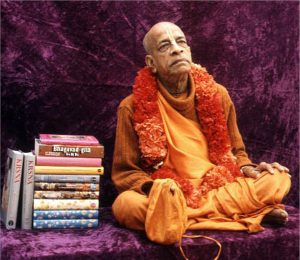
Srila Prabhupada with Books

Śrīla Prabhupāda’s Authority in his Books and Other Contexts

The intuition that Śrīla Prabhupāda’s words are perfect, without defect, even when not explicitly backed by śāstra is definitely the correct understanding. When a devotee is perfect in Kṛṣṇa consciousness, like Śrīla Prabhupāda, he not only perfectly sees Kṛṣṇa, but also perfectly sees Kṛṣṇa’s material energies as well. A pure devotee has none of the four defects of conditioned souls. Kṛṣṇadāsa Kavirāja Gosvāmī says: bhrama, pramāda, vipralipsā, karaṇāpāṭava, ārṣa-vijña-vākye nāhi doṣa ei saba, “Mistakes, illusions, cheating and defective perception do not occur in the sayings of the authoritative sages.”